The Art of Tokenomics - How to Spend Smarter on AI
 Sivakumar GanesanJuly 23, 20264 min read
Article content
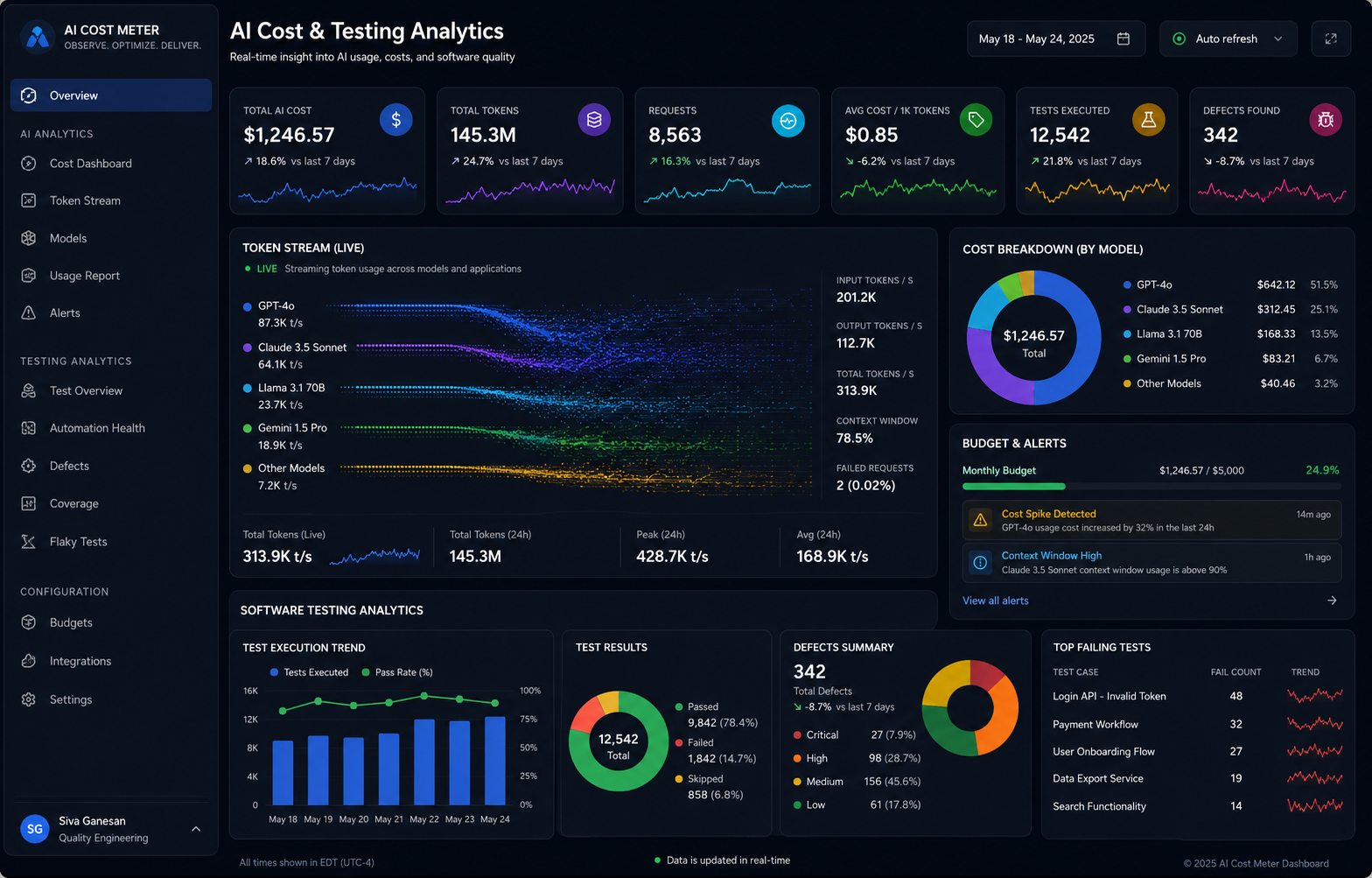
The AI meter starts running before you even get your answer.
- It runs when you type your prompt.
- It keeps running when the model generates a response.
- If you add tools, long chat history, or multi-step agents, it runs even faster.
So the question is not whether we should use AI. We should. The real question is: are we spending smartly and getting real value for every dollar?
First, a reality check on "AI costs are exploding"
The UNCTAD's Technology and Innovation Report 2025 says AI is on track to become a $4.8T global market by 2033. That tells us the direction clearly: spend is scaling rapidly, and cost discipline matters now.
If your organization is scaling LLM usage, token efficiency is no longer a developer concern alone. It is a business concern.
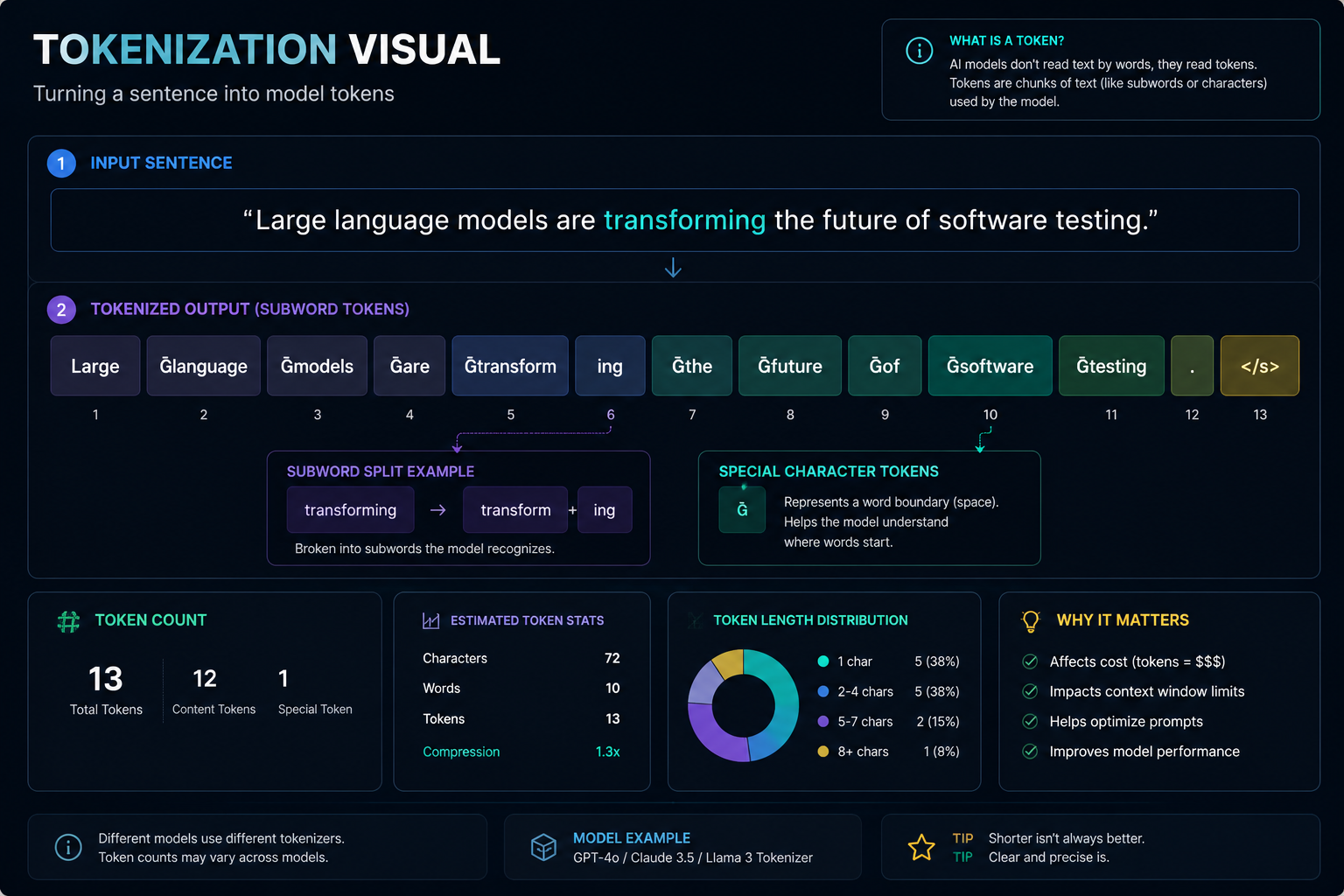
What is a token, exactly?
A token is the unit of text an LLM processes.
Helpful rule of thumb for English:
- 1 token ≈ 4 characters
- 1 token ≈ 0.75 words
- 100 tokens ≈ 75 words
So yes, your short-looking prompt may be bigger than expected, especially with formatting, code, JSON, and tool metadata.
Why is token usage calculated this way?
Models do not read text as humans do. They convert text into token IDs first. That tokenization enables:
- Faster numerical processing on GPUs/TPUs
- Better handling of punctuation, spaces, and partial words
- Better multilingual processing
- More predictable billing and usage metering
You are billed because the model processes tokens in and generates tokens out. Some systems also track cached tokens and reasoning/tool-related tokens separately.
Common token-cost pitfalls teams underestimate
1. Long documents in every request
Pasting a full BRD, test strategy, and architecture doc each turn is expensive. Most teams do this accidentally in chat-based workflows.
2. Multi-agent systems
More agents often means repeated context handoffs, duplicate prompts, and tool overhead. Without careful orchestration, "smart architecture" becomes "expensive architecture."
3. Reasoning-heavy models for simple tasks
Using a top-tier reasoning model for basic rewrite, extraction, or classification tasks is like using a race car in city traffic.
4. Huge knowledge-base retrieval
Pulling too many chunks from RAG pipelines can multiply token input quickly, especially when relevance filtering is weak.
5. Tool and system-prompt overhead
Tool-enabled calls can add non-trivial hidden tokens (model/system instructions + tool schemas + results).
Same task, very different cost: a simple example
Assume one task uses:
- 10,000 input tokens
- 3,000 output tokens
Using Anthropic's published per-million-token pricing:
| Model | Input Price | Output Price |
|---|---|---|
| Claude Haiku 4.5 | $1/MTok | $5/MTok |
| Claude Sonnet 4.6 | $3/MTok | $15/MTok |
| Claude Opus 4.8 | $5/MTok | $25/MTok |
Estimated per-task cost:
- Haiku 4.5: $0.025
- Sonnet 4.6: $0.075
- Opus 4.8: $0.125
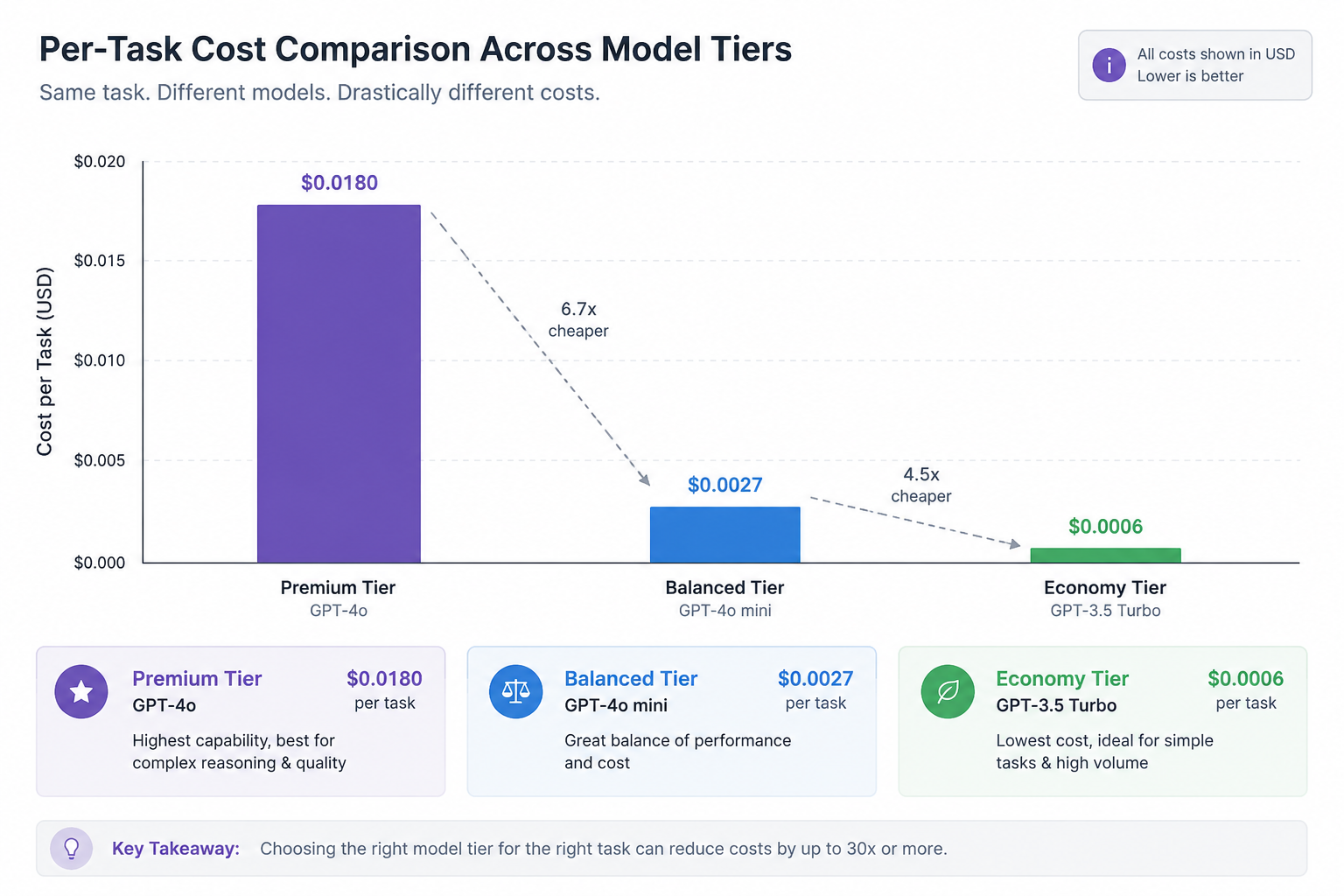
That is a 5x spread for the same token volume. Model choice alone can decide whether your AI budget feels controlled or chaotic.
Practical optimization techniques that actually work
1. Pick the right model for the right job
Use lightweight models for triage, tagging, extraction, formatting, and simple Q&A. Reserve premium reasoning models for hard analysis, design trade-offs, and ambiguity-heavy tasks.
2. Trim long chats
Long-running threads accumulate context and inflate every new call.
- Summarize every N turns
- Keep a compact "working memory" block
- Archive old detail out of active context
3. Cache stable context
If your platform supports prompt caching, reuse static instructions, policies, or reference text.
4. Control retrieval size in RAG
- Fewer, better chunks
- Strict relevance thresholds
- Aggressive deduplication
5. Instrument cost by workflow
Track token and dollar usage by:
- Feature
- Team
- Prompt pattern
- Model tier
If you cannot see where spend comes from, you cannot optimize it.
Final thought
Token efficiency is the foundation, not the finish line.
Real AI economics also includes:
- Compute and infrastructure costs
- Operational overhead
- Risk oversight
- Security and compliance controls
Teams that win with AI are not just model-savvy. They are cost-aware, architecture-aware, and governance-aware.
If you found this interesting, you can find more articles on quality assurance, test automation, tools, and processes on testingchief.com/blog. Don't forget to like and share this post with friends and community. If you have a question, get in touch. Thank you!